
Buying the right Generator Set is not simply a matter of comparing engine power or choosing the lowest price. It is a practical decision involving load demand, operating conditions, fuel availability, noise limits, maintenance access, and long-term reliability. A unit that looks impressive in a showroom may struggle when exposed to dust, heat, unstable voltage, or frequent starting cycles. Small details matter.
As power-generation author Paul Breeze has explained, “A power plant is not simply a collection of machines; it is a system.” That principle applies directly to every Generator Set purchase. The engine, alternator, control panel, cooling system, transfer switch, and installation environment must work together. Ignore one part, and the entire backup plan can become fragile.
This guide presents 10 practical tips for choosing a Generator Set with greater confidence. It examines standby and prime-power ratings, starting loads, fuel consumption, voltage requirements, emissions performance, enclosure design, service support, and total ownership cost. It also considers real working conditions, such as a construction site covered in fine cement dust or a remote facility where a technician may be hours away. The cheapest option is not always economical. Nor is the largest unit automatically safer.
Some decisions remain imperfect. Future expansion is difficult to predict, and published specifications may not reflect actual field performance. Therefore, buyers should verify technical data, request maintenance records, inspect the installation site, and consult a qualified power professional before committing. A careful purchase protects equipment, reduces downtime, and delivers dependable electricity when the grid cannot.
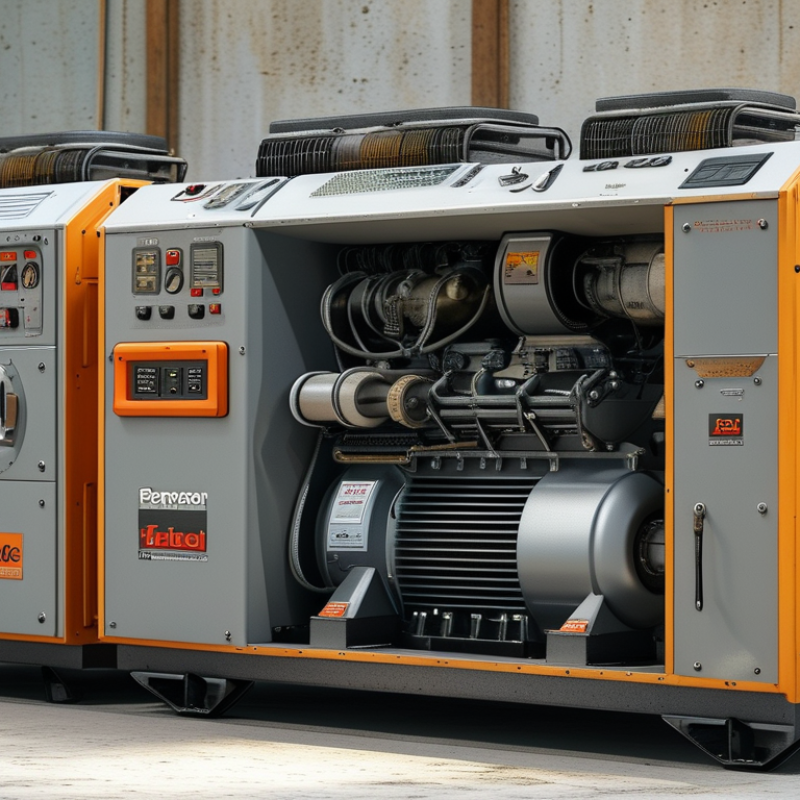
Define Your Power Requirements and Operating Conditions
A generator set should begin with a load profile, not a guessed kilowatt figure. List every essential load, its running power, starting current, power factor, and acceptable interruption time. Motors, pumps, compressors, and cooling systems can demand several times their running current during startup. Electronic equipment may also create harmonic distortion and unstable loading.
Small details matter.
The U.S. Energy Information Administration reported approximately 5.5 hours of average customer interruptions in 2022, excluding major events. That figure shows why backup power planning must reflect real operating conditions. Identify which circuits must remain live, then separate critical, noncritical, and temporary loads. Add future capacity, but avoid excessive oversizing. Light loading can reduce efficiency and encourage wet stacking in diesel engines.
Site conditions deserve equal attention. The International Energy Agency reported that data centres used about 1–1.5% of global electricity in 2022, with demand expected to rise sharply. High-density facilities therefore need careful cooling and starting-load calculations. Record ambient temperature, altitude, humidity, ventilation, fuel storage, and installation space. ISO 8528 guidance supports evaluating generator performance under defined conditions, rather than relying only on nameplate ratings. I have seen plans fail because engineers measured steady loads but ignored a lift motor starting at the same moment. Recheck the sequence. Load-bank testing can reveal assumptions that spreadsheets hide.

Estimate both continuous running demand and short-term starting demand before selecting a generator set. The examples below represent typical electrical loads and should be verified against the nameplates and starting methods of the actual equipment.
Sizing tip: select a generator that can support the highest combined running load and the largest motor-starting surge while allowing reasonable reserve capacity for future loads.
Choosing a generator set starts with the load, not the engine size. List every device, its running watts, and its starting demand. Motors, pumps, compressors, and refrigeration units often need extra power during startup. A pump may look small until it begins running. Separate essential loads from optional ones. This prevents expensive oversizing and sudden overloads. A practical lesson from site assessments is simple: nameplate watts can mislead. Startup demand may briefly double the running requirement. Keep that detail visible.
Select the generator type according to the working environment. Portable sets suit temporary tools and short outages. Towable units support construction sites or mobile operations. Stationary sets fit buildings needing automatic backup. Decide whether the duty is standby or prime power. Standby models operate during interruptions, while prime units can run for extended periods. Avoid sizing a set for its maximum rating alone. A unit running at only 20% load may waste fuel and suffer poor performance. Check derating for altitude, heat, and installation conditions.
Fuel choice also affects reliability. Diesel offers strong endurance and suits heavy, continuous loads. Gasoline can support lighter portable equipment but may require careful storage planning. Natural gas provides convenient fixed-site operation, yet supply interruptions remain possible. For remote sites, confirm fuel delivery access before choosing the set. Ask a qualified electrician to verify voltage, phase, frequency, and transfer equipment. The connection must prevent dangerous backfeeding. Never improvise. Recheck your calculations after adding future equipment. A useful planning habit is leaving modest capacity for expansion, without buying a machine far larger than today’s real demand.
| No. | Buying Factor | Recommended Selection | Typical Data or Rating Guidance | What to Check Before Purchase |
|---|---|---|---|---|
| 1 | Define the application | Choose a portable, inverter, standby, prime-power, or continuous-duty generator according to the load and operating pattern. | Portable units commonly serve temporary or occasional loads. Standby units support backup power. Prime-power units are designed for variable loads over extended operating periods. | Identify whether the generator is for emergency backup, construction, outdoor events, remote operations, or continuous off-grid use. |
| 2 | Select the generator type | Use an inverter generator for sensitive electronics and low-noise applications; use a conventional alternator generator for larger or more demanding loads. | Inverter output is electronically regulated and is generally suitable for computers, communications equipment, and household electronics. Conventional sets are often available at higher power ratings. | Confirm voltage, frequency, phase, noise limits, portability, enclosure type, and whether parallel operation is required. |
| 3 | Choose the fuel | Select gasoline for portability, diesel for heavy-duty operation, natural gas for fixed installations, or dual-fuel/LPG where fuel flexibility is important. | Gasoline is widely available but has limited long-term storage stability. Diesel generally offers strong durability and fuel efficiency under high loads. Natural gas provides convenient utility supply where available. | Compare fuel availability, storage requirements, runtime, local regulations, cold-weather performance, ventilation, and delivered fuel cost. |
| 4 | Calculate running load | Add the operating watts of all equipment that may run at the same time. | Running watts = voltage × current for single-phase loads. For three-phase systems, power depends on voltage, current, and power factor. | Use the equipment nameplate or manufacturer specification rather than estimating from physical size. Separate essential and nonessential loads. |
| 5 | Allow for starting surge | Size the generator for motors, pumps, compressors, refrigeration equipment, and other inductive loads that require extra starting power. | Starting demand can be several times the normal running demand, depending on motor design, controls, and starting method. | Record both running watts and starting watts. Check whether soft starters, variable-frequency drives, or sequential load starting can reduce peak demand. |
| 6 | Choose the power rating | Select a unit whose rated output covers the calculated maximum demand without continuous overloading. | Keep a practical reserve of approximately 15–25% above the expected running load when the application and starting requirements allow it. | Check both kW and kVA ratings. Do not compare kVA and kW without considering the stated power factor; kW = kVA × power factor. |
| 7 | Match voltage and phase | Choose single-phase for many homes and small loads, or three-phase for compatible commercial and industrial equipment. | Common low-voltage systems include approximately 120/240 V single-phase and 208/120 V or 480/277 V three-phase, depending on the electrical system and region. | Verify voltage, frequency, phase configuration, neutral requirements, connection method, and compatibility with the transfer switch. |
| 8 | Evaluate runtime and efficiency | Choose the fuel-tank size and engine configuration based on the required unattended operating period. | Runtime varies with load, fuel capacity, engine efficiency, and ambient conditions. A generator operating well below its efficient load range may consume fuel inefficiently. | Request runtime at 25%, 50%, 75%, and 100% load where available. Confirm automatic shutdown protections for low oil pressure, overheating, and overspeed. |
| 9 | Check installation and noise | Use an open-frame set where ventilation and noise are acceptable, or a weatherproof enclosure for outdoor standby installations. | Noise is measured in dB(A), usually at a stated distance. Sound levels increase with load and may be affected by reflective walls or restricted spaces. | Provide adequate clearance, exhaust routing, grounding, weather protection, airflow, and carbon-monoxide safety controls. Never operate combustion generators indoors. |
| 10 | Plan transfer, maintenance, and compliance | Use a properly rated manual or automatic transfer switch and establish a regular maintenance schedule. | Maintenance commonly includes oil and filter service, battery inspection, coolant checks, fuel-system inspection, load-bank or operational testing, and periodic exercise for standby units. | Confirm electrical-code compliance, permits, warranty terms, spare-parts availability, service intervals, emergency stop access, and installation by a qualified electrician. |
Important: Actual generator sizing should be verified using the nameplate data of every connected load, the local electrical code, and the installation requirements for the selected fuel and generator configuration.
Buying the right generator set starts with your actual load, not its advertised output. List starting watts for pumps, compressors, and refrigeration motors. Then measure running demand with a qualified electrician. A small margin matters. Oversizing can waste fuel and cause poor combustion at light loads. Compare efficiency at 25%, 50%, and 75% load, not only at maximum rating. Request fuel-consumption figures in liters per hour and liters per kilowatt-hour. These numbers reveal differences hidden by attractive specifications.
Runtime depends on tank size, load, and control settings. Compare usable tank capacity rather than total capacity. At a 60% load, calculate operating hours before refueling. My field checks often find that real runtime differs from brochure estimates. Site conditions matter. Dusty air, cold weather, and frequent starts can increase consumption. Noise also needs a practical test. Measure dB(A) at a fixed distance, such as seven meters, with the set under normal load. A unit that sounds quiet outdoors may still disturb nearby rooms.
Emissions should be compared at the loads you expect to use. Ask for verified data covering the correct fuel type and operating range. Confirm that the documentation suits your local requirements. Maintenance access affects reliability as much as engine design. Check filter replacement space, oil-drain access, and service intervals. I once focused too heavily on purchase price. That was a mistake. A cheaper set can cost more through fuel, downtime, and difficult maintenance. Evaluate the whole operating pattern. That is where the real comparison begins.
When choosing a generator set, safety features deserve close attention.
Look for a clearly marked emergency stop. Guards should cover belts, fans, and hot exhaust parts. A low-oil shutdown can prevent severe engine damage. Overload protection matters during sudden demand changes. Carbon monoxide monitoring may be essential in enclosed or partially enclosed areas. Confirm that installation plans follow local electrical and workplace requirements.
The control panel should show voltage, frequency, current, fuel level, and operating hours.
Clear alarms help operators react before a small fault becomes expensive. Remote monitoring is useful, but it should not replace regular site checks. Test the automatic transfer function under controlled conditions. Confirm that the set starts, accepts load, and stops correctly. A quiet screen is not always a healthy machine. Some alarms are easy to overlook.
Maintenance planning should include oil, coolant, filters, batteries, belts, terminals, and fuel quality.
Keep inspection records with dates, readings, and completed work. Arrange periodic load-bank testing, especially when the generator rarely runs. Service support should provide trained technicians, genuine technical documentation, and reasonable parts availability. Ask about response times before signing an agreement. Review emergency contact procedures. I have seen maintenance plans fail because no one owned the calendar. That gap is small, but costly. Also, budget for practical training, since a perfect manual cannot replace confident operation.
Tip 1: Confirm installation needs before comparing generator sets. Record essential loads, starting surges, phase requirements, runtime, and available fuel storage. Measure the installation area, cable routes, ventilation openings, and noise limits. A qualified electrician should verify transfer equipment and earthing arrangements. I would not rely on the nameplate alone. A pump may draw several times its running current.
Tip 2: Calculate total ownership cost, not only purchase price. Include delivery, concrete foundation, switchgear, fuel, routine servicing, batteries, testing, and eventual removal. Ask for a written five-year estimate. Small omissions become expensive. Fuel use under partial load deserves attention; many sites run below expected demand.
Tip 3: Read warranty conditions line by line. Check coverage period, response times, labor, parts, and exclusions caused by poor maintenance or unsuitable fuel. Request service records and escalation contacts. Confirm the set meets applicable emissions, electrical, fire, and workplace requirements in your location. Keep certificates, inspection reports, and commissioning results together. Compliance is not paperwork alone. It protects people and keeps the installation usable. I still leave room for uncertainty, because future loads and regulations can change.
Contact
KYOCERA SGS Precision Tools, Inc.
(330) 686-5700
150 Marc Drive
Cuyahoga Falls, OH 44223
Products
Resources