
Why Is My Car Alternator Not Charging? This question often appears after a slow engine crank, a dim dashboard, or a battery warning light. The Car Alternator may be failing, but the alternator is not always the true cause. Loose battery terminals, damaged wiring, a worn serpentine belt, or a weak battery can create similar symptoms. A careful diagnosis prevents unnecessary parts replacement.
A practical inspection begins with simple clues. Listen for belt squealing near the alternator. Check whether the headlights become noticeably dim at idle. Use a multimeter to test battery voltage before starting and while the engine runs. A healthy charging system commonly produces about 13.5 to 14.8 volts, although specifications vary by vehicle. Modern cars may use smart charging systems, so one voltage reading cannot prove everything. That detail is easy to overlook.
Safety matters. Keep hands, clothing, and tools away from moving belts and pulleys. Do not disconnect the battery while the engine is running. That old test can damage sensitive electronics. Professional technicians often inspect grounds, fuses, connectors, belt tension, and charging-system data before replacing an alternator. Still, diagnosis is not perfectly predictable. Intermittent faults may disappear during testing, leaving only a faint warning light or a stored computer code. This guide explains the most likely causes, practical checks, and signs that professional service is the safer choice. A small measurement can prevent a large repair bill.
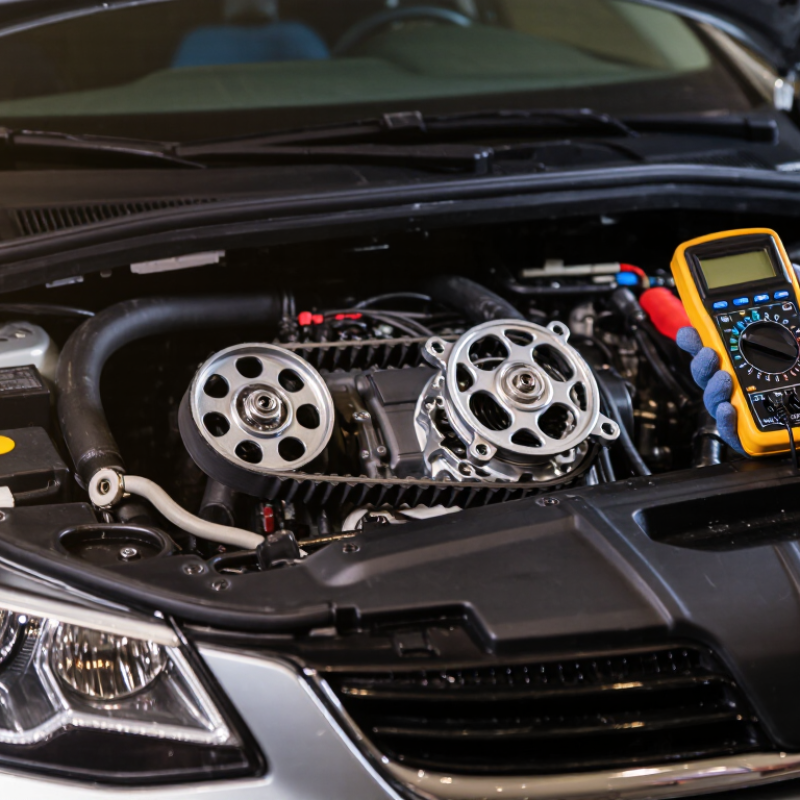
The alternator is the car’s electrical generator. It converts engine rotation into electricity while you drive. A rectifier changes that electricity into direct current for the vehicle’s systems. The battery mainly starts the engine and helps stabilize voltage. It is not designed to power every electrical load for long. When charging fails, headlights may dim, warning lights can appear, and the engine may eventually stop. Small symptoms matter.
In workshop testing, I check the battery voltage before blaming the alternator. A healthy, rested battery often measures near 12.6 volts. With the engine running, many vehicles show roughly 13.8 to 14.7 volts. Modern charging systems can vary, so this range is not absolute. Loose connections, damaged wiring, a worn belt, or a weak battery can create similar readings. I have seen technicians replace alternators too quickly. That mistake wastes money and misses the real fault.
Tips:
Inspect the belt for cracks, looseness, or unusual squealing.
Clean corrosion from the battery terminals carefully.
Measure voltage at the battery and alternator output when possible.
Turn on the headlights and blower, then watch for a sharp voltage drop.
Avoid touching moving parts.
A multimeter can mislead when its leads are damaged, so test the meter first.

A car alternator may stop charging for several ordinary reasons. A loose, glazed, or broken drive belt is one of the most common causes. If the belt slips, the alternator cannot spin fast enough. You may hear squealing near the engine. A weak belt tensioner can create the same symptom.
Corroded battery terminals, damaged wiring, or a poor engine ground can interrupt charging. Check for white or green deposits around the terminals. Also inspect the main charging cable for heat damage. A blown fuse or faulty fusible link may stop current from reaching the battery. These problems can look like alternator failure.
The alternator itself may have worn brushes, damaged diodes, or a failed voltage regulator. In practical diagnosis, technicians should test the battery, belt, wiring, and alternator together. Replacing the alternator too quickly can waste money. A single voltage reading can fool you. Test voltage with the engine off, then running, while switching on lights and the cabin fan. Charging voltage that stays low under load suggests a real fault. Yet an old battery can also distort the results. Turn the engine off before touching belts or electrical connections. Small details matter.
A car may start normally, then show a battery warning light minutes later. Headlights can turn yellow or pulse at idle. Interior lights may also flicker. These symptoms often point to unstable charging, not a weak battery alone. A slow power window is another clue. Listen for a sharp belt squeal. It can indicate belt slip, poor tension, or a failing pulley.
During practical inspections, I check battery voltage with the engine off and running. A healthy resting battery is often near 12.6 volts. Running voltage commonly rises above 13 volts, but vehicle specifications differ. Numbers alone can mislead. Corroded terminals, loose grounds, damaged wiring, and a worn belt can mimic alternator failure. If the warning light appears with a burning smell, switch off unnecessary electrical loads and stop safely. Heat around the alternator deserves attention.
Repeated jump-starts are a warning, not a repair. The engine may stall when the battery loses its remaining charge. Ask a qualified technician to test output under electrical load. They should inspect ripple, connections, belt condition, and charging control signals. Do not rely on one quick voltage reading. I have seen assumptions waste time, especially when a loose ground caused the problem. Some warning lights appear late. A quiet dashboard does not guarantee healthy charging. Record when symptoms occur, such as during rain, idling, or nighttime driving. That detail can shorten diagnosis.
A charging problem does not always mean the alternator has failed. I once blamed the alternator too quickly. A loose ground connection caused the real fault. Begin with the engine off and inspect the battery terminals, ground cable, drive belt, wiring, and charging-system fuse. The belt should look firm, not cracked or oily. Measure battery voltage with a digital multimeter. A healthy, rested battery often reads about 12.4 to 12.7 volts. Lower readings can mislead the test.
Start the engine and measure across the battery posts again. Many conventional systems show roughly 13.7 to 14.7 volts while running. Check the reading with headlights and the cabin fan switched on. Voltage should remain reasonably stable. If it stays near 12 volts, the battery is not receiving enough charge. Do not disconnect the battery during this test. That can damage sensitive electrical components.
Test carefully. Place the meter probes directly on the posts, not only on the cable ends. Then perform a voltage-drop test between the alternator output terminal and the positive battery post. Repeat between the alternator case and negative battery post. A noticeable drop suggests resistance in a cable or connection. Some vehicles use computer-controlled charging, so their voltage may change during operation. Check the service information for the vehicle. A professional load test can reveal weak diodes or internal faults that basic voltage checks miss. My first reading is never the final answer.
Repair and Prevention Options for Charging System Faults
When an alternator stops charging, the battery warning light may appear first. Headlights can dim, the engine may crank slowly, or electrical accessories may behave strangely. Do not assume the alternator is automatically at fault. A loose belt, corroded terminal, damaged ground cable, blown fuse, or poor wiring can create similar symptoms. With the engine off, a fully charged battery often reads about 12.4 to 12.7 volts. With the engine running, many systems measure roughly 13.8 to 14.7 volts, though controlled charging systems can vary. Testing under electrical load gives more reliable evidence.
Tips: Inspect the belt for cracks, glazing, or slack. Clean battery terminals carefully. Check the main ground connection. Never disconnect the battery while the engine runs. That shortcut can damage sensitive electronics.
Repair depends on the confirmed fault. A technician may replace a worn belt, repair a cable, or test the alternator’s regulator and diode output. If internal components have failed, replacement may be more practical than rebuilding.
I have seen batteries replaced repeatedly when the real problem was a weak ground connection. That mistake wastes money and delays a safe repair.
After fixing the fault, measure charging voltage again and check for unusual noise, heat, or a burning smell. Preventive inspections during routine servicing can catch belt wear and terminal corrosion before the vehicle leaves you stranded.
Contact
KYOCERA SGS Precision Tools, Inc.
(330) 686-5700
150 Marc Drive
Cuyahoga Falls, OH 44223
Products
Resources